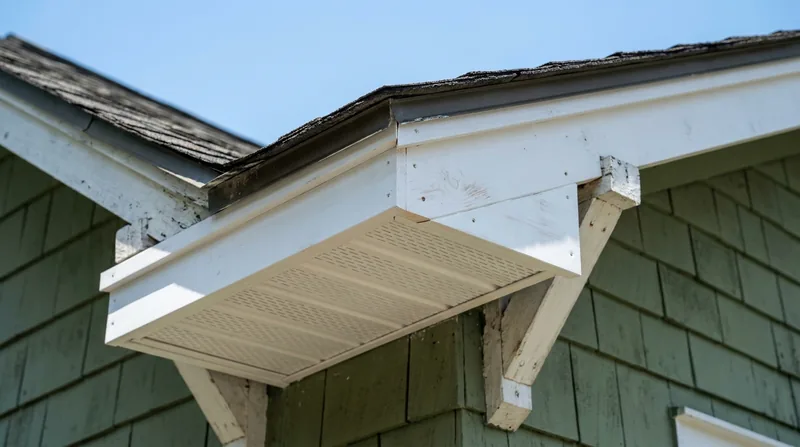




Salt air, wind-driven rain, and the long wet Lowcountry summers attack the roofline relentlessly. Peeling paint and soft fascia boards are the first sign of rot or termite entry moving in. We replace fascia, soffit and exterior trim repair in Charleston with primed, rot-resistant material, closing the gaps that let moisture and pests into the eaves. Whether you own a narrow single house in Ansonborough, a Victorian cottage on the East Side, a raised beach house on Folly Beach, or a 1950s brick ranch in Avondale, the roofline is where water gets in. We stop it there, before the damage reaches the structural framing underneath.
Why Fascia and Soffit Rot Matters in Charleston's Humid Climate
The Lowcountry climate is relentless. Hot, humid summers keep moisture in the air year-round, and tropical storms drive rain horizontally into the soffit and fascia boards that protect your roof edge. Formosan and eastern subterranean termites are active every month here, not just in spring and summer. When fascia begins to peel or soften, it means water is already working into the wood, and termites are not far behind. A neglected roofline leak spreads into the rim joist, the header board, and eventually the floor framing itself. Catching it early, when the damage is only at the surface, saves thousands in structural repair later.
- Peeling paint or visible soft spots signal moisture entry and the start of rot.
- Gaps between fascia and roof sheathing let water and termites access the framing cavity.
- Replaced fascia and soffit close those gaps and shed water away from the structure.
- Primed, rot-resistant material (like redwood or treated Douglas fir) resists decay and termite damage far longer than original wood.
- Proper installation with flashing and caulking prevents re-entry of moisture at the joint.
Addressing fascia and soffit rot early stops the cascade of damage that leads to floor joist and structural framing repair.
Key info: In Charleston, salt spray and wind-driven rain from hurricanes and tropical storms create peak damage in late summer and early fall. We see the most roofline failures in homes on James Island, Sullivan's Island, and Isle of Palms, where salt air accelerates wood decay and termite entry. Even homes a mile inland in Charleston proper show accelerated fascia rot compared to upstate properties.
For more detail on how moisture and termites damage the wood frame, see our full wood rot and dry rot repair service page.
How We Replace Fascia, Soffit and Exterior Trim in Charleston
We start with a close look at the existing fascia, soffit, and trim boards. If the rot is surface-level (paint failure, soft wood only in the outer inch or so), we often remove and replace just the damaged board. If the rot has penetrated deeper or if termite galleries are visible, we replace the entire section to prevent re-infestation and ensure the repair lasts. We use primed, rot-resistant material, install proper flashing at the roof edge to shed water, and caulk all joints to seal out moisture and pests. The goal is a tight, water-shedding roofline that will stand up to Charleston's climate for decades.
- We inspect the fascia, soffit, trim, and the framing behind them to assess the extent of decay.
- We remove the damaged board or section, taking care not to disturb the roof sheathing or flashing.
- We inspect the rim joist and header board for hidden rot or termite damage and repair or replace as needed.
- We cut and fit new fascia and soffit from primed redwood or treated Douglas fir, matching the profile and size of the original.
- We install flashing at the roof edge and caulk all joints with exterior-grade sealant to prevent water entry.
- We prime and paint the new wood to match your existing trim or provide a fresh finish.
The entire process keeps water out and pests away from the structural framing for years to come.
Real example: A Victorian cottage in Cannonborough had peeling fascia along the east side of the house, where afternoon sun and salt-laden wind from the harbor hit hardest. The original fascia was soft pine, nearly gone. We replaced it with primed redwood fascia, installed new flashing at the roof edge, and sealed every joint. The homeowner painted it to match the cottage's trim color. Five years later, no rot, no termite entry, and the roofline is tight.
See our termite damage repair page for detail on how we handle framing that has been compromised by termites.
Methods and Materials for Fascia, Soffit and Exterior Trim Replacement
| Approach | Description | Best for |
|---|---|---|
| Spot repair and repaint | Sand, fill, prime, and paint surface damage on otherwise sound fascia. | Paint failure only, no underlying rot or termite damage. |
| Single-board replacement | Remove and replace one fascia or soffit board with primed redwood or treated fir. | Rot or damage isolated to one board; framing behind is sound. |
| Multi-board section replacement | Replace fascia, soffit, and trim across an entire roof edge or gable end with new primed stock. | Rot extends across multiple boards or framing behind needs selective repair. |
| Full roofline rebuild with flashing and caulk | Replace all fascia, soffit, and trim; install new flashing and seal all joints with exterior caulk. | Widespread rot, termite damage, or water intrusion; need a long-term water-tight seal. |
Fascia, Soffit and Exterior Trim Repair Cost in Charleston: What to Expect
Fascia and soffit repair in Charleston typically starts at $700 for a single-board replacement on a modest home. A full roofline replacement on a larger house or a house with multiple gable ends can run $2,500 to $5,000 or more, depending on the linear footage, the extent of hidden rot behind the fascia, and whether the rim joist or header board needs repair as well. Access matters too: a single-story ranch is faster and cheaper than a two-story Victorian house that requires scaffolding or lifts. The material cost for primed redwood or treated Douglas fir is moderate, but labor is the bulk of the bill, especially if we find rot in the framing behind and need to sister or replace a rim joist or header.
We recommend getting two or three estimates so you can compare scope, material choices, and price. A low estimate often means the contractor is missing hidden damage or planning to skip proper flashing and caulking. A high estimate may include unnecessary work. A clear estimate from us will spell out what boards are being replaced, what material is being used, whether framing repair is included, and what the labor and material costs are. Travel is included in our pricing across Charleston and surrounding areas, with no separate mileage fee.
For a detailed breakdown of pricing on all our services, visit our full pricing overview. To get a free estimate for your specific roofline, call (843) 212-1020 or request an estimate online.
Fascia, Soffit and Exterior Trim Repair Near Me: What to Look for When Hiring a Carpenter in Charleston
When you're ready to hire a carpenter for fascia and soffit work, a few things matter more than price alone. Look for a contractor who will come to your home, inspect the damage in person, and explain what needs to be done and why. Ask for references from recent jobs in Charleston, Mount Pleasant, Summerville, or your neighborhood. Get the estimate in writing, with a clear description of materials, scope, and labor. Check that the contractor is fully insured and can provide a certificate of insurance before work begins. If your home is in a historic district (like South of Broad or Ansonborough) or if you live in a community with an HOA, ask your contractor whether any permits or design review are needed before work starts. Most fascia and soffit work does not require a building permit in Charleston, but it is always wise to verify with your local building department if you are unsure.
- A good contractor will inspect the roofline in person and explain what rot or damage you are looking at.
- Ask for at least two references from homes in your area or neighborhood.
- Get the estimate on paper, with materials, scope, and price clearly spelled out.
- Confirm the contractor is fully insured and will provide proof before work starts.
- If your home is in a historic district or HOA community, ask whether permits or design approval is needed.
- Avoid contractors who offer to waive or absorb your insurance deductible, as this can complicate your claim.
When you are ready to move forward, contact us for a free estimate. We will schedule a time to visit your home, inspect the damage, and give you a clear, written estimate within 24 hours.
Fascia, Soffit & Exterior Trim Repair in Charleston: Pricing Guide
| Service | Price | Details |
|---|---|---|
| Single-board fascia or soffit replacement | Starting at $700 | Includes removal, new primed board, flashing, caulk, and paint on one roof edge section. |
| Multi-board roofline section (one gable or roof edge) | Starting at $1,500 | Fascia, soffit, and trim replacement across 20 to 30 linear feet with flashing and full caulk seal. |
| Full roofline replacement (entire house perimeter) | Starting at $3,500 | All fascia, soffit, and trim boards plus selective framing repair if rot found behind; scope and price vary by house size and condition. |
| Framing repair (rim joist, header, or soffit blocking) | On estimate | Additional cost if rot extends into structural wood; requires on-site inspection to assess sistering or replacement needs. |
| Travel and site visit | Included | No separate mileage or travel fee across Charleston, Mount Pleasant, Summerville, James Island, and surrounding service areas. |
| Free estimate | No charge | Response within 24 hours at (843) 212-1020; no obligation to book, written quote provided. |
Indicative pricing, the exact cost depends on square footage, finish, and site access. Free personalized estimate within 24h at (843) 212-1020.


