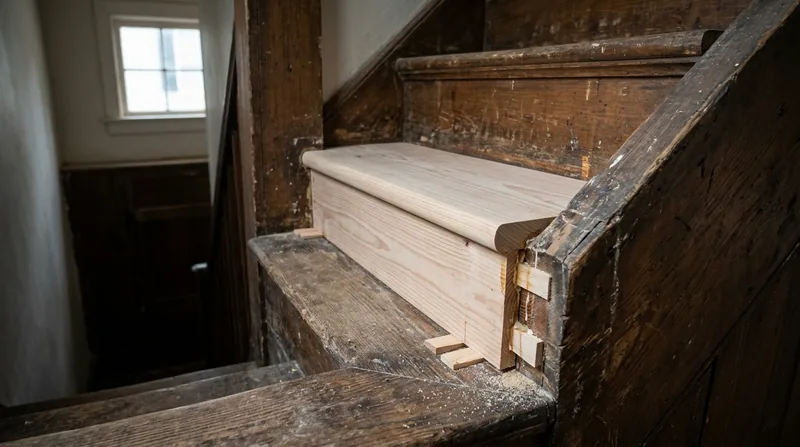




Charleston's distinctive residential architecture, from the stacked piazzas of 18th-century single houses on South of Broad to the raised beach houses on Folly Beach and Sullivan's Island, demands stairways and railings that match both the period character and the structural demands of a low-lying, salt-air coastal environment. Stair and railing repair in Charleston addresses the real wear patterns that emerge from decades of foot traffic, moisture exposure, and the coastal climate that softens fasteners and promotes wood movement. Whether you're dealing with squeaky treads in a narrow Ansonborough townhouse, loose balusters on a side piazza, or settling exterior steps on James Island, the same carpenters who understand Charleston's wood species and construction methods will diagnose the cause and propose repair before replacement. We rebuild stringers, tighten treads, restore period railings, and install solid handrails and attic ladders across Charleston, North Charleston, Mount Pleasant, Summerville, and the surrounding Lowcountry.
Why Stair and Railing Repair Matters in Charleston's Historic and Coastal Homes
Stairs and railings in Charleston take a beating from the combination of heavy use, moisture from our long wet summers, and salt-laden air that corrodes fasteners and promotes wood movement. The steep interior stairs of single houses compress treads and stringers over time; exterior steps on raised beach homes face wind-driven rain and thermal cycling that loosens joinery; and period railings deteriorate when their original fastening systems fail or when wood rot begins at the base of balusters. A loose tread or wobbly banister is not merely annoying, it signals that the underlying structure needs attention before a fall becomes a liability.
- We tighten and rebuild stair stringers that have settled or twisted under load.
- We replace worn treads while preserving the original stringer and riser if the wood is sound.
- We restore period railings to their original proportions and joinery, matching Charleston's 18th- and 19th-century standards.
- We install modern handrails and attic ladders to code without disrupting the character of older homes.
- We repair or replace balusters and newel posts that have loosened, rotted, or split.
Addressing stair and railing issues promptly prevents larger structural problems and keeps your home safe and functional.
Key info: Permits are commonly required for stair alterations and railings, particularly in historic districts or on properties subject to architectural review. Check with the City of Charleston or your local building department to confirm what applies to your address before work begins.
How We Repair and Rebuild Stairs and Railings in Charleston
Our process starts with a careful inspection to understand what has failed, why it failed, and whether repair or replacement is the honest answer. We measure treads for level and squareness, check stringers for rot or movement, test baluster fastening, and look for evidence of water damage or termite activity. Once we know the scope, we explain what we can fix and what needs to come out, then propose a timeline and cost before we touch a nail.
- We inspect the full stair assembly, including stringers, treads, risers, balusters, and newel posts.
- We test for wood rot, termite damage, or structural movement that may require a structural engineer or permit.
- We disassemble the affected section carefully to preserve original materials when they are sound.
- We repair or replace individual components (treads, balusters, fasteners) without unnecessary demolition.
- We reinstall or rebuild the assembly to match the original profile and joinery, or to modern code if required.
- We finish with stain or paint to match the existing work.
This methodical approach keeps costs down and preserves the character that makes Charleston homes worth living in.
Local example: A client in Ansonborough had squeaky treads and a loose banister on the main staircase. We found that the newel post had shifted on its mounting, and two treads had worked loose from their stringers. We tightened the newel base, refastened the treads, shimmed the balusters, and the stairs have been solid for years. Total cost was under $1,200 because the stringers and treads themselves were sound.
Stair and Railing Repair Methods and When to Use Each
Different failure modes call for different solutions. A squeaky tread may need only new fasteners; a rotted stringer may require sistering or full replacement; a loose baluster may need a new wedge or a re-drilled hole. The table below outlines the most common approaches and the conditions under which we recommend each.
| Approach | Description | Best For |
|---|---|---|
| Tread Refastening | Remove old fasteners, clean the interfaces, and reinstall with new screws or bolts. | Squeaky treads, loose treads that sit on sound stringers. |
| Tread Replacement | Remove a worn or damaged tread and install a new one, mortised or doweled to match the original joinery. | Treads with surface wear, splits, or minor rot; sound stringers underneath. |
| Stringer Sistering | Bolt a new stringer alongside a damaged one to share the load without removing the existing stringer. | Partial rot or movement in a stringer; treads and railings are still sound. |
| Full Stringer Replacement | Remove the damaged stringer and install a new one, carefully supporting treads and railings during work. | Extensive rot, termite damage, or structural failure; requires temporary support and often a permit. |
| Baluster and Railing Repair | Tighten, wedge, or replace individual balusters; restore period railings to original profile. | Loose balusters, rotted posts, missing spindles, period restoration work. |
The right method depends on what we find during inspection. We always propose repair over replacement when the underlying structure is sound.
Stair and Railing Repair Cost in Charleston: What to Expect
Stair and railing repair in Charleston starts at around $600 for straightforward jobs like tightening fasteners and minor baluster work, and can range from $1,500 to $4,000 or more for full tread replacement or stringer work. The actual cost depends on several concrete factors: the extent of rot or damage, whether the stringers or risers need replacement, the size and complexity of the railing, access to the work area, and whether permits or structural engineering are required.
A squeaky tread on a straight staircase costs far less than rebuilding a curved or winding stair with custom balusters. Water damage or termite damage in a stringer adds time and material cost. Period restoration work, in which we match original joinery and finish, costs more than a straightforward modern repair. Salt air and moisture exposure on beach house steps may call for pressure-treated lumber or a more durable species, which raises the material cost. Getting two or three estimates from local carpenters lets you compare approaches and pricing; a low estimate that skips inspection or proposes unnecessary replacement is a red flag.
For a detailed breakdown of typical costs and what factors move the price up or down, see our full pricing overview. We provide free estimates within 24 hours at (843) 212-1020, with no obligation to book.
Stair and Railing Repair Near Me: What to Look for When Hiring a Carpenter in Charleston
Finding a carpenter who understands Charleston's specific challenges, knows the difference between a simple tightening job and a structural issue, and can work with both period methods and modern code is the foundation of a good repair. Avoid contractors who lead with replacement before they inspect, who promise to eliminate termite damage as part of their carpentry work, or who cannot explain why a repair makes sense. Instead, look for someone who listens, inspects carefully, and proposes repair first.
- Verify that the contractor is fully insured and can provide proof of coverage before any work begins.
- Ask for references from recent stair or railing jobs in Charleston, and follow up with at least two of them.
- Confirm whether a permit is required for your specific work by checking with the City of Charleston or your local building department.
- Get at least two estimates in writing, with a detailed scope of work and materials listed for each.
- If your home is in a historic district or subject to architectural review, confirm that the contractor understands the requirements before proposing materials or methods.
- Ask how the contractor handles unexpected damage (rot, termites, structural issues) discovered during the work, and what the process is for approving additional scope.
A carpenter who takes time to explain the pathology and propose the most cost-effective repair is the one worth hiring. Contact us for a free estimate and to discuss your specific situation.
Stair & Railing Repair in Charleston: Pricing Guide
| Service | Price | Details |
|---|---|---|
| Tread refastening and baluster tightening | Starting at $600 | Includes inspection, refastening squeaky treads, tightening loose balusters, and minor wedging or shimming work. |
| Single tread replacement | Starting at $800 | One new tread, mortised or doweled to stringers, finished to match existing work; assumes sound stringers underneath. |
| Stringer repair or sistering | Starting at $1,500 | Includes inspection, sistering a new stringer or partial stringer replacement, refastening treads, and finishing; cost rises with extent of rot or damage. |
| Full staircase rebuild or complex railing restoration | On estimate | Full stringer replacement, curved stairs, period railing restoration, or jobs requiring structural support or permits need site inspection first. |
| Travel | Included | No separate call-out fee or mileage charge within Charleston and surrounding service areas. |
| Free estimate | No charge | Response within 24 hours at (843) 212-1020; includes site inspection, scope assessment, and written proposal with no obligation to book. |
Indicative pricing, the exact cost depends on square footage, finish, and site access. Free personalized estimate within 24h at (843) 212-1020.


