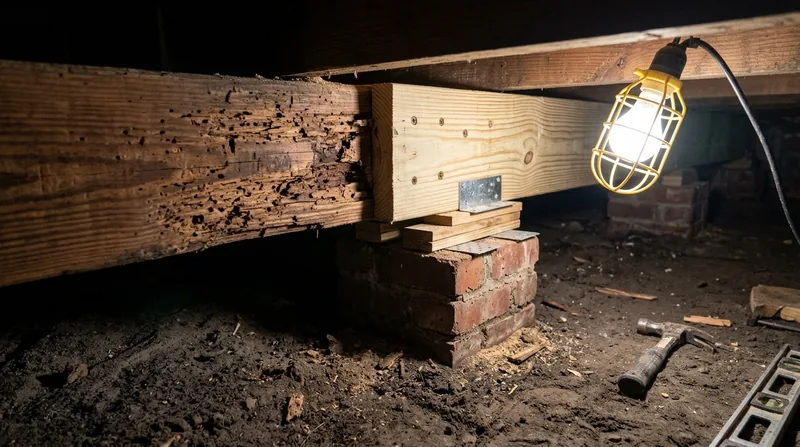




Sagging, bouncy, or soft floors in Charleston homes are a signal that something below needs attention. Moisture, termite damage, settling piers, or rot in the floor joists and subfloor are the usual culprits. Charleston's low elevation, salt-air climate, and damp crawlspaces create conditions where wood damage compounds over time. The narrow 18th- and 19th-century houses south of Broad, the raised cottages and bungalows of the East Side, and the beach houses on pilings all share this vulnerability. We identify what's causing the sag, repair or replace compromised joists, and rebuild subfloor sections so your floors are level, solid, and ready for finish work. Call us at (843) 212-1020 for a free estimate, or read on to understand what floor joist and subfloor repair involves in a Charleston home.
Why Floor Joist and Subfloor Damage Matters in Charleston's Older Homes
Charleston's building stock sits low on a peninsula between two rivers, wrapped by salt marsh and tidal water. King tides and storm surge reach many streets. Long, hot, humid summers keep crawlspaces damp year-round, and both Formosan and eastern subterranean termites are a serious, persistent problem. The heart-pine joists that carry floors in 18th- and 19th-century homes are beautiful and strong when dry, but they cannot tolerate sustained moisture. Brick piers settle unevenly over centuries. Subfloor planks rot from below, and joists lose load capacity. A soft or bouncy floor is not just uncomfortable. It signals structural movement that will worsen without intervention.
- Termite-damaged joists lose stiffness and carry loads unevenly, causing visible sag and bounce.
- Rot in the sill plate or rim joist spreads upward into the floor frame and subfloor.
- Settling brick piers allow joists to drop, creating dips and uneven surfaces.
- Damp crawlspaces under raised houses accelerate wood decay and attract termites.
- Deferred repair leads to larger structural problems, higher costs, and potential damage to finishes and walls above.
Addressing floor damage early prevents more expensive repairs and keeps your home safe and level.
Key info: If you notice a soft spot in your floor, especially in a crawlspace house in Cannonborough, Elliotborough, or the East Side, have it inspected promptly. Termite damage and rot accelerate in Charleston's climate. The Charleston Building Department can advise on permit requirements for structural work such as joist replacement or subfloor rebuilding, so check with them before work begins.
For more detail on wood damage and repair, see our page on wood rot and dry rot repair.
How We Repair Floor Joists and Subfloors in Charleston Homes
We start with a clear assessment. We inspect the joists and subfloor from the crawlspace, measure sag and deflection, and probe for soft wood or active termite damage. If your home has a termite inspection report, we review it carefully. We then determine whether joists can be sistered (reinforced alongside the original), or whether sections must be replaced. Subfloor planks are rebuilt where necessary, and the floor is leveled before finishes go back down. The work is methodical and site-specific, not a one-size-fits-all formula.
- We crawl under the house and document the extent of damage, sag, and any evidence of termites or moisture.
- We measure the span and load requirements to determine whether sistering or replacement is appropriate.
- We install support posts or adjustable jacks as needed to hold the floor level during work.
- We sister new joists alongside damaged ones using bolts and blocking, or we remove and replace sections entirely.
- We rebuild subfloor sections with pressure-treated or solid-sawn material and fasten them securely.
- We level the floor and inspect the work before finishes are reinstalled.
The result is a floor that is level, solid, and ready for whatever finish work comes next.
Example: A 1920s bungalow in Wagener Terrace had two sagging joists in the back bedroom, termite-damaged and soft. We sistered new pressure-treated joists alongside them, installed a support post in the crawlspace, and leveled the floor. The homeowner was able to refinish the hardwood without filling dips or gaps. Total time on site was three days.
See our broader framing and structural carpentry page for other load-bearing work we handle.
Floor Joist and Subfloor Repair Methods
| Approach | Description | Best for |
|---|---|---|
| Sistering | Install a new joist alongside a damaged one, bolted together to share the load. | Partial rot or termite damage where the joist still has some integrity; preserves the original framing. |
| Section Replacement | Remove a damaged section of joist and subfloor, install new material, and reconnect to existing framing. | Severe rot, multiple joists in one span, or extensive termite damage that compromises load capacity. |
| Full Joist Replacement | Remove an entire joist and install a new one, using temporary support to hold the floor level during work. | Joists that are so damaged or degraded that sistering would not restore adequate strength. |
| Subfloor Patching | Remove and replace rotted or damaged subfloor planks in localized areas, leaving sound framing intact. | Isolated soft spots or moisture damage that does not extend to the joists themselves. |
| Crawlspace Moisture Control | Improve drainage, ventilation, and grading around the house to reduce damp conditions that accelerate decay. | Homes with persistent crawlspace moisture, especially in low-lying areas near marsh or tidal water. |
Floor Joist and Subfloor Repair Cost in Charleston: What to Expect
Floor joist and subfloor repair in Charleston typically starts at $1,800 for a small, localized repair such as sistering one or two joists or patching a subfloor section. Larger jobs, such as replacing multiple joists across a span or rebuilding a significant portion of subfloor, range from $3,500 to $8,000 or more. The cost depends on the number of joists involved, the extent of subfloor damage, access to the crawlspace, whether temporary support posts are needed, and whether the work requires a permit from the Charleston Building Department. A house in James Island with severe termite damage may cost more than a similar repair in a drier location. Getting two or three estimates is smart; it helps you understand the scope and compare approaches.
See our full pricing overview for more detail on what drives cost and how we structure estimates.
Floor Joist and Subfloor Repair Near Me: What Charleston Homeowners Should Know When Hiring a Contractor
Hiring the right carpenter for structural work matters. Look for someone who is fully insured and who has real experience with Charleston's building stock, termite damage, and moisture problems. Ask for references and check them. Request a detailed written estimate that describes what is being repaired, what method will be used, and what the timeline is. If the work involves load-bearing joists or large spans, a licensed structural engineer may be needed to size new members and verify the design; ask whether the contractor will coordinate with an engineer. If your house is in a historic district or subject to an HOA, confirm that the work meets any design guidelines or approval requirements. A good contractor will answer these questions clearly and not cut corners on safety or structural integrity.
- Verify that the contractor carries liability insurance and workers compensation coverage.
- Ask for three references from similar jobs completed in the past two years.
- Get a detailed written estimate that breaks down materials, labor, and timeline.
- Confirm whether the work requires a permit and whether the contractor will handle the application.
- Understand the contractor's approach to termite damage: repair and replacement only, not chemical treatment or pest control.
- If the job involves removing or altering a load-bearing wall or beam, confirm that a structural engineer will be consulted.
Charleston Carpentry handles floor joist and subfloor repair across Charleston, Mount Pleasant, Summerville, and surrounding areas. Contact us at (843) 212-1020 for a free, no-obligation estimate. We'll inspect your crawlspace, explain what we find, and give you a clear plan and price.
Floor Joist & Subfloor Repair in Charleston: Pricing Guide
| Service | Price | Details |
|---|---|---|
| Sistering one to two joists | Starting at $1,800 | Includes new pressure-treated joists, bolts, blocking, and leveling; cost increases with joist length and access difficulty |
| Subfloor patching or section replacement | Starting at $2,400 | Includes removal of damaged planks, new material, fastening, and leveling; price varies by area and extent of rot |
| Full joist replacement or multiple joists | Starting at $3,500 | Includes temporary support, removal, new joists, reconnection, and floor leveling; cost depends on span, number of joists, and access |
| Complex structural repair or large-scale subfloor rebuild | On estimate | Requires site inspection to assess joist count, span, damage extent, crawlspace access, and whether engineer or permit is needed |
| Travel | Included | No separate mileage or call-out fee for jobs within Charleston and surrounding service areas |
| Free estimate | No obligation | Response within 24 hours at (843) 212-1020; we inspect, document damage, and provide a detailed written proposal |
Indicative pricing, the exact cost depends on square footage, finish, and site access. Free personalized estimate within 24h at (843) 212-1020.


