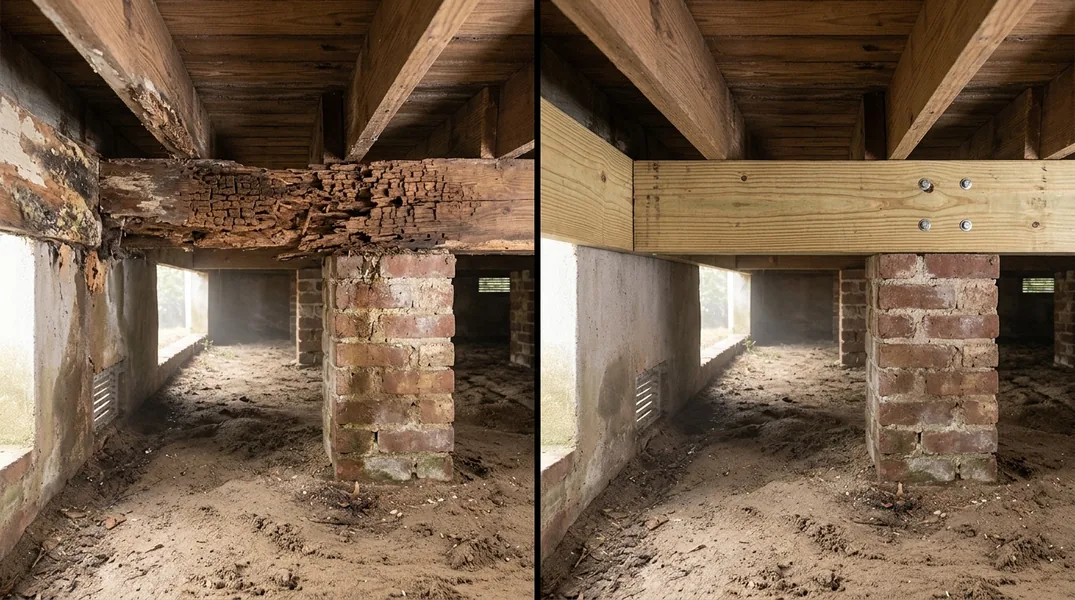
Understanding Dry Rot vs Termite Damage
If you own a home in Charleston, you've probably heard warnings about wood-destroying pests and fungi. Two of the most common threats to structural integrity are dry rot and termite damage, yet many homeowners confuse them or don't realize they're dealing with two entirely different problems. Understanding the difference is crucial because the repair approach, timeline, and prevention strategies vary significantly between the two.
Dry rot is caused by a fungus that thrives in damp, poorly ventilated environments. It breaks down the cellulose in wood, causing it to become brittle and crumbly. Termites, on the other hand, are insects that actively consume wood as a food source. While both can cause serious structural damage, the way they damage wood, the speed at which they work, and the solutions required are quite different. Misidentifying the problem could lead to ineffective repairs and continued deterioration of your home's foundation and framing.
What Does Wood Rot Look Like? Visual Signs of Dry Rot
When examining your home for damage, knowing what does wood rot look like is your first line of defense. Dry rot typically appears as wood that has darkened significantly, often turning a dark brown or grayish color. The affected wood becomes soft and spongy to the touch, and if you press on it with a screwdriver or awl, it may crumble or compress easily. Unlike healthy wood, rotted wood loses its structural integrity and becomes brittle, sometimes breaking apart in your hands.
Another telltale sign of dry rot is the presence of mycelium, a white or grayish fungal growth that may appear on the wood's surface or in surrounding areas. You might also notice a musty, earthy smell emanating from affected areas, particularly in basements, crawl spaces, or around windows and doors where moisture accumulates. Dry rot often spreads in a somewhat random pattern, following the grain of the wood and areas where moisture is most prevalent. The damage can extend beyond what's visible on the surface, making professional inspection essential for accurate assessment and Wood Rot & Dry Rot Repair.
Signs of Termite Damage in Wood: What to Look For
Understanding the signs of termite damage in wood helps you catch an infestation before it becomes catastrophic. Termite damage typically appears as a network of tunnels or galleries running through the wood, often following the grain. If you tap on infested wood, it may sound hollow. Unlike dry rot, termite damage is often more uniform and extensive, as termites work methodically through wood structures. The wood may appear intact on the surface but be hollowed out underneath, which is why a thorough inspection is critical.
Termites often leave behind mud tubes on foundation walls, basement walls, or crawl space supports. These tubes are made of soil and wood particles mixed with termite saliva and serve as protected pathways for the insects to travel. You may also notice small, pellet-like droppings called frass near infested wood. In some cases, you might actually see termites themselves, particularly during spring swarming season when winged termites emerge to establish new colonies. The damage from termites can progress rapidly, and early detection is essential for preventing structural failure and requiring extensive Termite Damage Repair.
Key Differences: Damage Patterns and Progression
One of the most important distinctions between wood rot vs termite damage lies in how each damages wood and how quickly the damage spreads. Dry rot spreads through moisture and poor ventilation, so it tends to be concentrated in specific areas where water intrusion or humidity is highest. You'll typically find it around plumbing leaks, foundation cracks, roof leaks, or poorly ventilated crawl spaces. The progression of dry rot is gradual but relentless, and it can affect large sections of wood if moisture problems aren't addressed.
Termite damage, by contrast, spreads based on where the colony is located and their feeding patterns. Termites can travel considerable distances from their nest through mud tubes and underground tunnels, making their damage patterns less predictable. However, termite damage often appears more uniform and systematic because termites follow a deliberate feeding strategy. Additionally, termite colonies can grow rapidly in warm climates like Charleston, potentially causing extensive damage in just a few years if left unchecked. The speed of termite damage often exceeds that of dry rot, making early intervention critical.
When to Call a Professional for Wood Rot & Dry Rot Repair Near Me
If you suspect either dry rot or termite damage in your home, professional inspection is essential. While minor surface damage might seem manageable, both conditions can hide extensive damage beneath the surface. Professionals have the tools and expertise to identify the full extent of damage and determine whether you're dealing with dry rot, termites, or both. Many homes experience both problems simultaneously, particularly in older structures or those with chronic moisture issues.
Charleston Carpentry specializes in diagnosing and repairing both types of wood damage. Our team can assess your home's condition, identify the root cause of the problem, and recommend appropriate solutions. For dry rot, this might involve addressing moisture sources, removing damaged wood, and installing new framing. For termite damage, we work in coordination with pest control professionals to eliminate the infestation and repair structural damage. We also offer Floor Joist & Subfloor Repair and Beam Replacement & Load-Bearing Wall Removal for more severe structural issues. Don't wait until damage becomes catastrophic. Contact Charleston Carpentry today at (843) 212-1020 to schedule a free estimate.
Prevention Tips and Long-Term Protection for Charleston Homes
The best strategy for dealing with wood damage is prevention. To protect your home from dry rot, focus on moisture control. Ensure gutters and downspouts direct water away from your foundation, maintain proper ventilation in crawl spaces and attics, and address any plumbing leaks promptly. Check around windows and doors for water intrusion, and consider installing vapor barriers in crawl spaces. Regular inspections of basement and foundation areas can catch moisture problems before they lead to fungal growth.
Termite prevention requires a different approach. Have your home inspected annually by a pest control professional, particularly if you live in a termite-prone area. Eliminate wood-to-soil contact around your foundation, keep mulch and landscaping materials away from your home's exterior, and maintain proper drainage to avoid moisture accumulation near your foundation. If you notice any signs of termite activity or wood damage, act quickly. Early detection and swift action can save thousands in repair costs. Whether you're dealing with suspected damage or want a preventive inspection, Charleston Carpentry is here to help. Call (843) 212-1020 or visit our website for more information about protecting your home's structural integrity.
Looking for a professional carpentry contractor in Charleston? Charleston Carpentry responds fast for all your carpentry needs.
Get a Free QuoteOur services: Wood Rot & Dry Rot Repair · Termite Damage Repair · Floor Joist & Subfloor Repair