Why Charleston's Historic Homes Face Unique Wood Challenges
If you own a Charleston single house, Freedman's cottage, or any period home in the Lowcountry, you're steward of irreplaceable architecture. These homes, many built in the 18th and 19th centuries, are beautiful testaments to our region's character. But they're also fighting a constant battle against moisture, salt air, wood-boring insects, and the relentless South Carolina humidity.
The truth is, historic wood construction was designed for a different climate and maintenance rhythm than what we practice today. Your home's original timber framing, wooden siding, and structural beams weren't treated with modern preservatives. The piazzas that define Charleston architecture are particularly vulnerable because they're exposed to weather from multiple angles. Add the salt spray from nearby marshes and ocean air, and you have a recipe for accelerated wood deterioration. Understanding these pressures is the first step toward protecting your investment.
The Difference Between Dry Rot, Wet Rot, and Termite Damage
Most homeowners use the term 'dry rot' loosely, but the distinction matters when you're planning repairs. Dry rot is actually a fungal decay that thrives in damp conditions, despite its misleading name. It appears as brown, cubical cracking in the wood and spreads rapidly because it can transport moisture through thread-like structures called mycelium. Wet rot, by contrast, requires constant moisture and causes wood to soften and darken. Both are serious, but dry rot is often more aggressive because it can spread even when the immediate area feels dry.
Termite Damage Repair is a separate category entirely. Termites create galleries or tunnels within the wood, leaving thin shells of sound wood on the surface while hollowing out the interior. This makes termite damage particularly dangerous because structural compromise isn't always visible until it's severe. In Charleston, subterranean termites are the primary threat, and they're active year-round in our warm climate. The key difference: fungi need moisture and oxygen, while termites need moisture and access to cellulose. Your repair strategy depends entirely on which enemy you're facing.
Historic Wood Siding Repair: Keeping Your Home's Exterior Authentic
Charleston single houses and Freedman's cottages typically feature original or period-appropriate wood siding, often lap siding or board-and-batten. This siding isn't just aesthetic; it's a protective barrier for the structural frame behind it. When siding fails due to rot, paint failure, or storm damage, the entire wall assembly becomes vulnerable. Water penetrates behind the siding, wicks into the structural framing, and creates conditions for Wood Rot & Dry Rot Repair that can spread deep into your home's bones.
The honest truth about wood siding repair is that there's no one-size-fits-all solution. Some damage can be addressed through targeted board replacement and repainting. Other situations require removing and replacing entire wall sections. Historic preservation guidelines in many Charleston neighborhoods add another layer of complexity because you may need to match original materials, profiles, and finishes. This is where experience matters enormously. A contractor unfamiliar with historic standards might install modern materials that look wrong, perform worse, and violate preservation requirements. We recommend getting a free estimate from someone who understands both the technical and aesthetic requirements of your home's era.
Piazza Repair: Addressing Charleston's Most Vulnerable Feature
The piazza is quintessentially Charleston, and it's also the most exposed and vulnerable part of your home. These covered porches or galleries take the full brunt of wind-driven rain, direct sun exposure, and salt air. The decking, support posts, railings, and roof structure are constantly cycling between wet and dry, which accelerates wood deterioration. Piazzas built before the 1950s rarely had adequate flashing or moisture barriers, meaning water routinely penetrates behind the surface.
Common piazza problems include rotted decking boards, compromised support posts that can no longer safely bear load, failed connections where railings meet posts, and deteriorated roof framing. The challenge is that piazza repairs often require structural work that goes beyond cosmetic fixes. If a support post has significant rot, simply replacing the visible portion isn't enough. You may need Beam Replacement & Load-Bearing Wall Removal to properly address the structural compromise. This is never a DIY project, and it's definitely not something to delay. A failing piazza post can collapse under load, creating a serious safety hazard. If you notice soft spots, visible rot, or gaps where railings connect to posts, contact Charleston Carpentry at (843) 212-1020 for a professional assessment.
Foundation and Floor Issues: When Rot Reaches Below the Surface
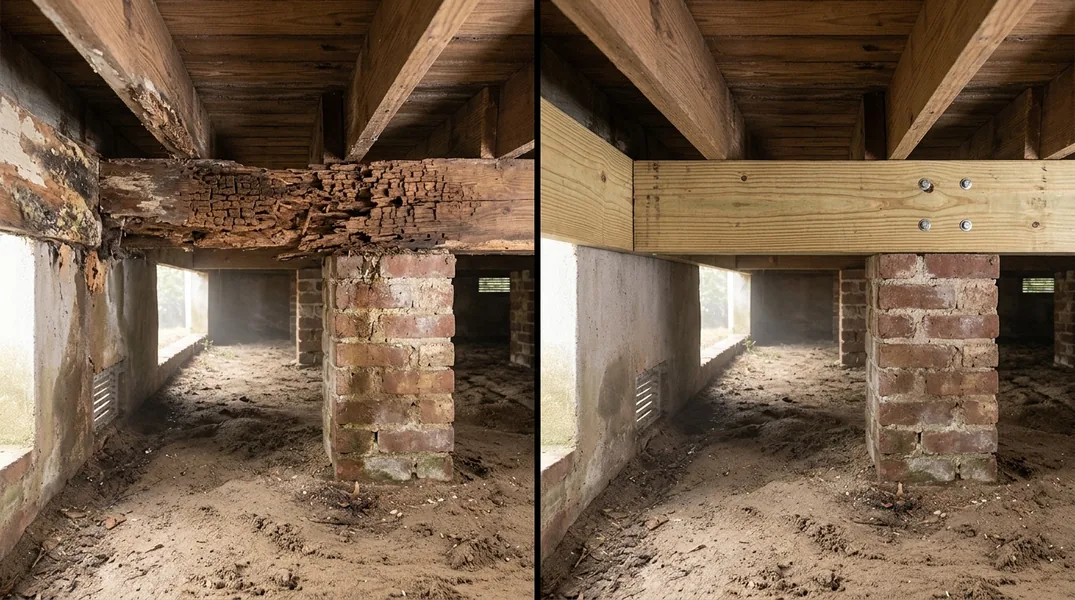
Historic homes often have brick foundations with minimal or no moisture barriers. Wooden sills, rim boards, and floor joists sit directly on or very close to these foundations, creating a perfect environment for moisture wicking and wood decay. Many Freedman's cottages and modest Charleston single houses were built with minimal clearance between the ground and the first floor framing, which compounds the problem. Water from foundation seepage, inadequate grading, or failed drainage systems migrates into these wood members, and before you know it, you have significant structural decay.
Floor Joist & Subfloor Repair is often necessary when moisture problems go unaddressed for years. Soft or spongy floors, visible mold in crawl spaces, or a musty smell are all red flags. The repair process typically involves removing damaged joists and subfloor, treating the foundation to prevent future moisture intrusion, and installing new structural members. This is substantial work that affects your home's structural integrity and should never be attempted without professional guidance. The good news is that modern moisture barriers and drainage solutions can prevent future problems if installed correctly during repairs.
Your Maintenance Plan: Preventing Problems Before They Start
Prevention is always cheaper than repair, especially with historic homes. A realistic maintenance plan for a Charleston single house or Freedman's cottage should include annual inspections of all wood surfaces, particularly siding, piazzas, and foundation areas. Look for paint failure, soft spots, visible cracks, or discoloration that might indicate moisture problems. Keep gutters and downspouts clean and functioning, ensure grading slopes away from the foundation, and maintain proper ventilation in crawl spaces and attics. Paint and seal exterior wood regularly, typically every 5 to 7 years for exposed surfaces like piazzas.
Beyond cosmetic maintenance, consider professional inspections every 3 to 5 years, especially if your home is over 100 years old or has experienced water damage. A trained eye can spot early signs of rot or termite activity that homeowners might miss. If you do find problems, addressing them promptly prevents exponential damage. A small area of wood rot caught early might cost a few hundred dollars to repair. The same rot left for two years can compromise structural members and cost thousands. Charleston Carpentry offers comprehensive inspections and honest assessments without pressure. Call (843) 212-1020 or request a free estimate today. We'll help you understand exactly what your historic home needs and create a realistic plan to protect it for the next generation.
Looking for a professional carpentry contractor in Charleston? Charleston Carpentry responds fast for all your carpentry needs.
Get a Free QuoteOur services: Wood Rot & Dry Rot Repair · Termite Damage Repair · Floor Joist & Subfloor Repair