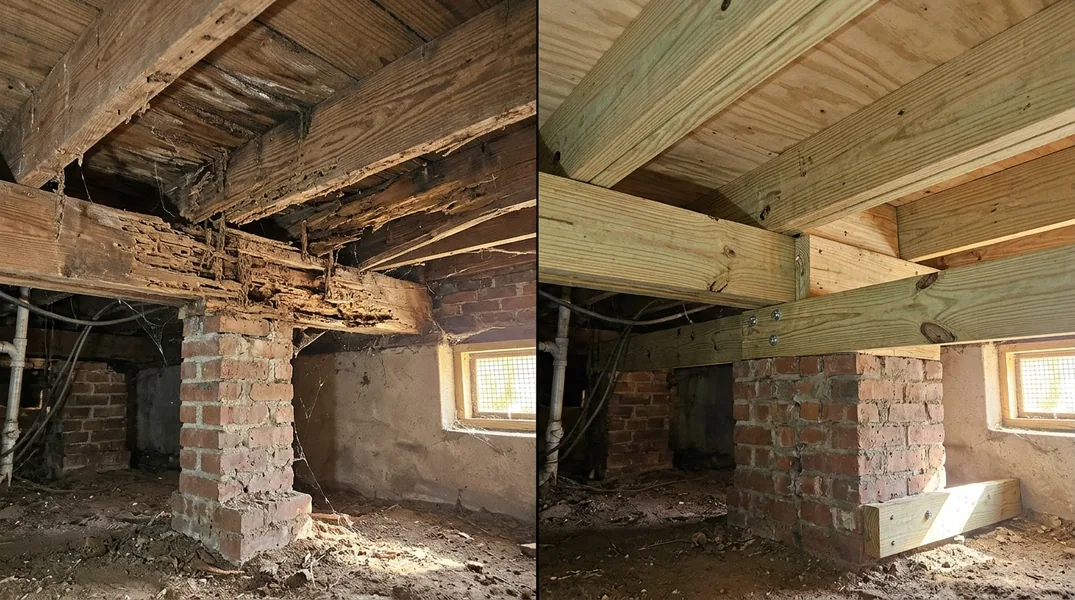
The Lowcountry Challenge: Why Wood Rot and Termite Damage Are Common Here
If you own a home in Charleston, you know the climate presents unique challenges for wood structures. The combination of high humidity, salt air, warm temperatures, and seasonal moisture creates the perfect storm for wood deterioration. Whether it's dry rot creeping through your attic, soft wood siding, or structural damage hidden beneath your home, the Lowcountry's environment accelerates decay in ways that homeowners in drier regions rarely experience.
Wood rot and termite damage often go hand in hand here. Both thrive in moist conditions, and both can compromise the integrity of your home's frame, siding, and foundation elements. The question most homeowners face is straightforward but critical: should you repair the damaged wood or replace it entirely? The answer depends on several factors, including the extent of damage, the structural importance of the affected wood, and your long-term maintenance goals. Understanding these factors will help you make an informed decision and avoid costly mistakes.
When Repair Makes Sense: Assessing Damage Severity
Wood Rot & Dry Rot Repair is often possible when damage is caught early and remains superficial. If you notice soft spots in your siding, discoloration, or early-stage fungal growth, repair may be your most cost-effective option. Surface-level rot that hasn't penetrated deep into the wood's structural core can frequently be treated, stabilized, and sealed without full replacement. A skilled carpenter can remove the affected portion, treat the area to prevent future decay, and reinforce the wood with epoxy fillers or other stabilization methods.
Repair is particularly practical for cosmetic or non-load-bearing elements like trim, fascia, soffits, and exterior cladding. If the damage is limited to a small section and the underlying wood structure remains sound, targeted repair preserves the original material and maintains the character of older Charleston homes. This approach also tends to be gentler on your budget. However, repair requires honest assessment. If the rot has penetrated more than a quarter-inch into the wood, affects load-bearing members, or shows signs of active infestation, repair alone may not be sufficient.
When Replacement Is Necessary: Structural and Safety Concerns
There are situations where replacement is not optional but essential. If wood rot or Termite Damage Repair has compromised structural elements like beams, joists, or load-bearing walls, replacement must be prioritized. Structural wood that has lost more than 30 percent of its cross-sectional area cannot safely support the loads it was designed to carry. Attempting to repair severely compromised structural wood puts your home and family at risk and may violate building codes.
Similarly, if termites have created extensive galleries or if dry rot has spread throughout a joist system or subfloor, replacement is the only reliable solution. Floor Joist & Subfloor Repair often requires replacement when damage is widespread because the structural integrity of your entire floor system depends on sound wood members. Attempting to repair multiple damaged joists piecemeal is less effective and more costly in the long run than properly replacing the affected sections. Additionally, when you replace rotted wood, you have the opportunity to install pressure-treated lumber or other rot-resistant materials that will better withstand the Lowcountry's climate.
The Cost Factor: Understanding Wood Rot Repair and Replacement Pricing
Budget is understandably a major consideration for most homeowners. The pricing for wood rot repair versus replacement varies significantly based on the scope of work, materials involved, and accessibility of the damaged area. Repair work typically costs less upfront because it involves targeted treatment and stabilization rather than removal and reinstallation of large wood members. For minor rot in siding or trim, repair might cost a few hundred dollars. For more extensive repair work on multiple areas, you could expect to invest $1,500 to $5,000 or more.
Replacement costs scale with the size and structural importance of the affected wood. Replacing rotted siding on a single wall section might run $2,000 to $8,000, depending on the material and extent. However, replacing structural elements like Beam Replacement & Load-Bearing Wall Removal can easily exceed $10,000 to $30,000 or more, especially if the work requires temporary support structures or involves multiple interconnected members. The good news is that replacement, while more expensive initially, often provides superior long-term value because new wood (especially pressure-treated varieties) resists rot and termites far better than original wood.
Rather than guessing at costs, the smartest approach is to get a professional assessment. Charleston Carpentry can evaluate your specific situation and provide a clear estimate so you know exactly what you're facing. Call us at (843) 212-1020 or request a free estimate to discuss your options without obligation.
Making the Decision: A Practical Framework for Homeowners
To decide between repair and replacement, ask yourself these key questions. First, is the damaged wood structural or cosmetic? Load-bearing elements require a higher standard of care and are more likely to warrant replacement. Second, how extensive is the damage? If rot or termite galleries affect less than 10 to 15 percent of a single board, repair is reasonable. If damage is widespread across multiple members, replacement is more practical. Third, how old is the wood, and what material is it? Original wood in a historic Charleston home might be worth preserving if damage is minor, whereas compromised modern framing is better replaced with pressure-treated lumber.
Fourth, consider moisture control. If rot or termite damage resulted from a roof leak, plumbing issue, or foundation moisture problem, you must address the underlying cause regardless of whether you repair or replace. Replacing wood without fixing the moisture source is simply delaying the next failure. Finally, think about your timeline and plans for the home. If you plan to stay long-term, replacement with better materials is a worthwhile investment. If you're selling soon, a professional repair that stabilizes the damage and passes inspection may be the practical choice.
Working with Professionals: Why Expert Assessment Matters
The most honest advice we can offer is this: don't try to diagnose wood rot or termite damage severity on your own. What looks like surface rot might extend deep into the wood, and what appears to be a small problem might indicate a much larger issue hidden from view. Professional carpenters have the experience, tools, and expertise to probe beneath the surface, identify the true extent of damage, and recommend the most cost-effective and safe solution for your specific situation.
Charleston Carpentry has spent years helping homeowners in the Lowcountry navigate these decisions. We understand the regional climate challenges, the building codes that apply to Charleston properties, and the long-term implications of repair versus replacement choices. We'll give you honest guidance, not just a sales pitch for the most expensive option. If repair is truly sufficient, we'll say so. If replacement is necessary, we'll explain why and help you understand the value of that investment. Contact us at (843) 212-1020 or request a free estimate to get started.
Looking for a professional carpentry contractor in Charleston? Charleston Carpentry responds fast for all your carpentry needs.
Get a Free QuoteOur services: Wood Rot & Dry Rot Repair · Termite Damage Repair · Floor Joist & Subfloor Repair