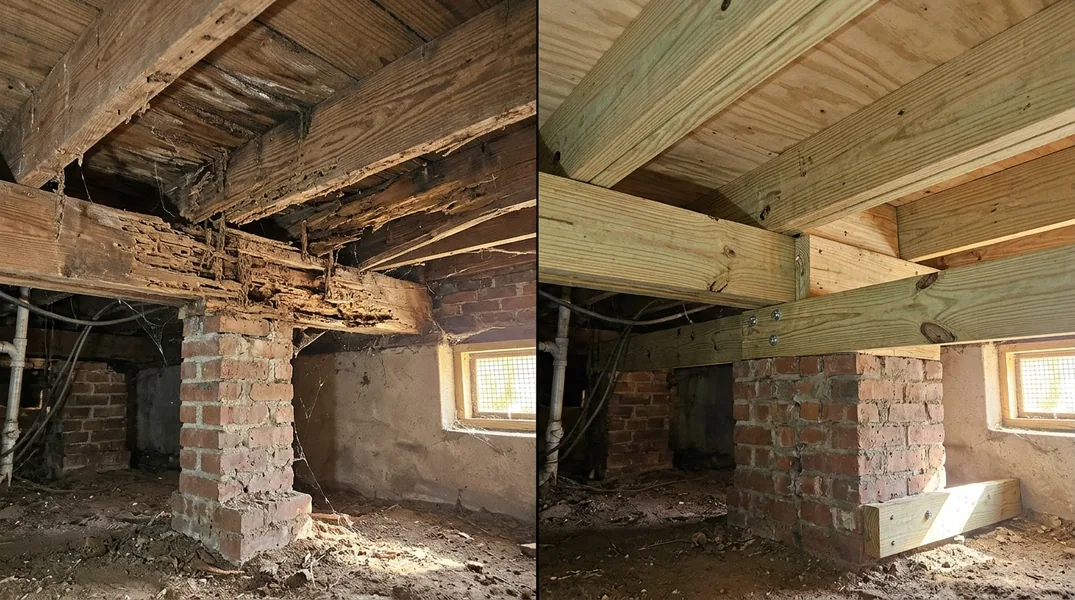
Why Charleston's Climate Creates the Perfect Storm for Wood Damage
Charleston sits in one of America's most challenging environments for wood preservation. The combination of high humidity, salt air, warm temperatures, and heavy rainfall creates ideal conditions for both termites and wood rot to flourish. Unlike drier regions where wood can remain stable for decades, homes in the Lowcountry face constant moisture exposure that weakens structural integrity year-round.
The problem starts with moisture. Wood absorbs water from the humid air, from rain penetration, and from ground moisture that wicks up through foundations. When wood stays damp, fungi that cause wood rot thrive. At the same time, the warm climate means termite colonies remain active even in winter, unlike in northern states where cold temperatures slow their reproduction. This creates a year-round threat that Charleston homeowners cannot ignore. The salt air near the coast also accelerates wood decay, making properties within a few miles of the harbor especially vulnerable.
Formosan Termites: The Most Destructive Species in Charleston
Termite Damage Repair in North Charleston and surrounding areas has become increasingly urgent because of Formosan termites. These aggressive pests are far more destructive than native subterranean termites. A single Formosan termite colony can contain millions of workers, compared to hundreds of thousands in native species. They consume wood faster, attack in larger numbers, and can cause severe structural damage in just a few years if left untreated.
Formosan termites arrived in the United States through shipping ports decades ago, and Charleston's port made it a natural landing point. Once established, they spread throughout the region and are now endemic to the Lowcountry. These termites are also more resilient to treatment and more likely to establish multiple satellite colonies within a single property. Homeowners who discover an infestation often face more extensive damage than they initially realize, making early detection and professional intervention critical.
Signs of Termite Damage Every Charleston Homeowner Should Know
Recognizing signs of termite damage early can save thousands in repair costs. The most obvious indicator is mud tubes running along foundation walls or wooden supports. These pencil-thin tunnels are highways that termites use to travel from soil to wood while staying protected from air exposure. Homeowners who notice these tubes should contact a professional immediately, as active termites are likely present.
Other warning signs include hollow-sounding wood when tapped, visible tunneling or galleries inside wood beams, sagging floors or ceilings, and windows or doors that suddenly stick or become difficult to open. Termite droppings, which resemble sawdust or coffee grounds, may accumulate near damaged wood. In spring, swarmers (winged termites) emerging from walls or foundations indicate an established colony. Because termite damage often occurs hidden inside walls and structural members, many homeowners don't notice problems until significant harm has been done. If you suspect termite activity, don't delay in getting a professional inspection.
Wood Rot & Dry Rot Repair Near Me: When to Call a Professional
Wood Rot & Dry Rot Repair requires professional expertise because the damage often extends deeper than visible surface decay. Wood rot occurs when moisture-loving fungi colonize wood and break down its cellular structure, weakening it to the point where it can no longer support weight. Dry rot, despite its name, actually requires moisture to develop and spreads rapidly through structural members if not addressed quickly. Both conditions compromise the safety of your home and can lead to catastrophic structural failure if ignored.
The challenge with wood rot is that it progresses silently inside walls, under siding, and within floor joists where homeowners cannot see it. By the time visible softness or discoloration appears, the damage has usually spread significantly. This is why professional inspection is essential. A trained carpenter can identify early-stage rot, assess how far it has spread, and recommend whether repair or replacement is necessary. Attempting DIY repairs on structural wood is dangerous and typically ineffective because the underlying moisture source must be eliminated and all affected wood must be properly treated or replaced.
Structural Repairs: Floor Joists, Beams, and Load-Bearing Walls
When termites or wood rot damage structural members, the repairs become complex and require professional carpentry. Floor Joist & Subfloor Repair is one of the most common structural issues in Charleston homes. Termites and rot frequently attack floor joists because these members sit close to the foundation where moisture is highest. Damaged joists cause floors to sag, bounce, or feel soft underfoot. Replacing compromised joists requires temporary support systems, precise carpentry, and building code compliance to ensure the repair is safe and permanent.
More severe damage may require Beam Replacement & Load-Bearing Wall Removal services. Beams that support the weight of entire sections of a house cannot be partially repaired. If a beam is significantly compromised, it must be replaced with a new structural member that meets current building codes. This work demands engineering calculations, proper bracing during installation, and coordination with other trades. Charleston Carpentry has the expertise to handle these critical repairs safely and to code. Attempting structural repairs without proper knowledge puts your family at risk and may violate local building regulations.
Termite Damage and Wood Rot Repair Cost in Charleston: What to Budget
The pricing for termite and wood rot repairs varies widely depending on the extent of damage, the structural members affected, and whether treatment or replacement is needed. A minor repair to a small area of rot might cost a few hundred dollars, while extensive structural damage requiring beam replacement can exceed ten thousand dollars. Many homeowners are surprised to learn that the longer damage goes unaddressed, the more expensive the eventual repair becomes. Early intervention saves money and prevents compounding structural problems.
Several factors influence final costs. The location of damage matters significantly: repairing damage in accessible areas costs less than work in crawl spaces or behind walls. The type of wood and structural system also affects pricing. If the damage has compromised multiple interconnected members, repairs become more complex and costly. Additionally, addressing the moisture source that caused the damage in the first place may require gutter repairs, foundation waterproofing, or drainage improvements, which add to the total investment. Charleston Carpentry recommends getting a free estimate from a qualified professional who can inspect your property and provide an accurate quote based on your specific situation.
Prevention and Regular Maintenance: Your Best Defense
The most cost-effective approach to wood damage is prevention. Charleston homeowners should maintain proper drainage around their foundation, keep gutters clean and functioning, ensure grading slopes away from the house, and repair roof leaks promptly. Reducing moisture around your home dramatically decreases the risk of both termite infestation and wood rot development. Crawl space ventilation and vapor barriers also help keep humidity levels in check. Annual inspections by a professional can catch early signs of damage before they become expensive problems.
Termite prevention typically involves regular professional inspections and, in many cases, ongoing pest management treatment. While not every home requires continuous chemical barriers, properties with a history of termite activity or those built on particularly vulnerable sites benefit from professional monitoring. Treating wood with preservatives during construction or renovation provides some protection, though no treatment is completely termite-proof in Charleston's aggressive pest environment. If you're concerned about your home's vulnerability or have noticed any warning signs, contact Charleston Carpentry at (843) 212-1020 to schedule a professional assessment and discuss the best protection strategy for your property.
Looking for a professional carpentry contractor in Charleston? Charleston Carpentry responds fast for all your carpentry needs.
Get a Free QuoteOur services: Wood Rot & Dry Rot Repair · Termite Damage Repair · Floor Joist & Subfloor Repair